







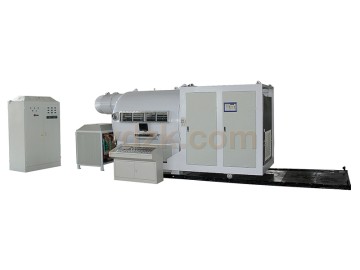


China Suppliers Magnetron Sputtering Vacuum Metallizing Machine Factory for Advanced Metal Coating Solutions
Products Introduction
Magnetron sputtering roll-to-roll metallizing is an advanced thin-film deposition technique widely employed in industries requiring large-area, flexible substrates, enables continuous deposition of uniform coatings on flexible substrates.
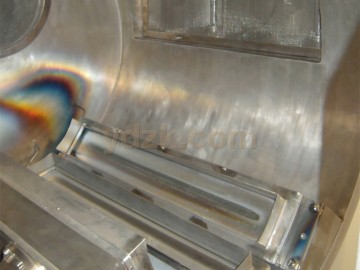
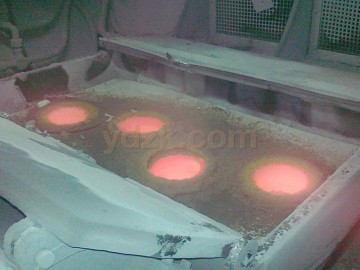
The process occurs in a high vacuum environment to minimize contamination and ensure high quality film deposition. A target material is bombarded with high-energy ions (typically argon) in a plasma environment. The magnetic field from the magnetron enhances ionization efficiency and plasma density, increasing sputtering rates. Ejected target atoms travel toward a moving flexible substrate wound on rollers and condense onto the moving substrate. The substrate moves continuously, allowing uniform coating deposition. During this process, the optical sensors can monitor the thickness of the layer to ensure the uniformity.
The magnetron sputtering technique enables deposition on diverse substrates including metals, alloys, and ceramics. This process demonstrates superior characteristics such as high deposition rate, exceptional adhesion between coating and substrate, along with highly dense, pure, and uniform film structures.
Frequently Asked Questions
It is an advanced thin-film deposition technique designed for continuous coating on flexible substrates. The process is carried out in a high-vacuum environment to ensure uniform and high-quality film structures over large surface areas.
This technique is highly versatile and enables deposition on a wide range of diverse substrates, including various metals, alloys, and ceramics.
During the continuous deposition process, integrated optical sensors monitor the thickness of the deposited layer in real-time, ensuring uniform thickness and high consistency across the substrate.
The process offers distinct advantages, including high deposition rates, exceptional adhesion strength between the coating and the substrate, and the production of highly dense, pure, and uniform film structures.
A high vacuum environment is essential to minimize contamination from atmospheric gases, ensuring the purity, quality, and structural integrity of the sputtered thin films.